Visceral Osteopathy (Barral Method) in Maple (Vaughan)
Visceral osteopathy is a gentle manual therapy for the mobility of your internal organs and the tissues around them. At our Maple (Vaughan) clinic it is provided by an osteopathic manual practitioner certified in visceral manipulation by the Barral Institute. Treatment is gentle, drug-free and built around your own assessment.
What is visceral manipulation therapy
Visceral manipulation was developed by Jean-Pierre Barral. Your organs need to move freely with every breath and every step. Scarring, surgery, injury, illness or long-term strain can make the tissues around them less mobile, and that tension can show up as pain or discomfort far from where it started.
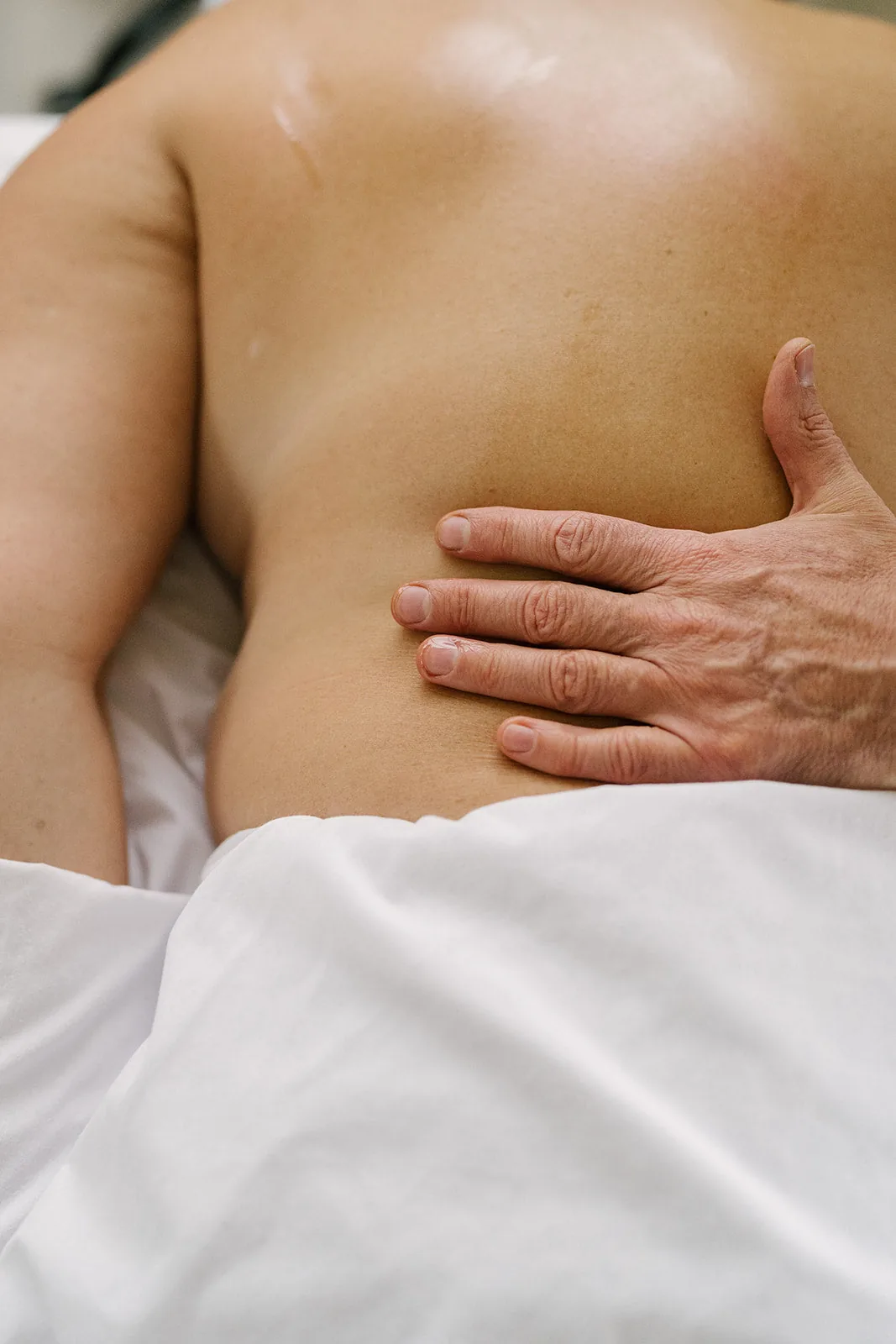
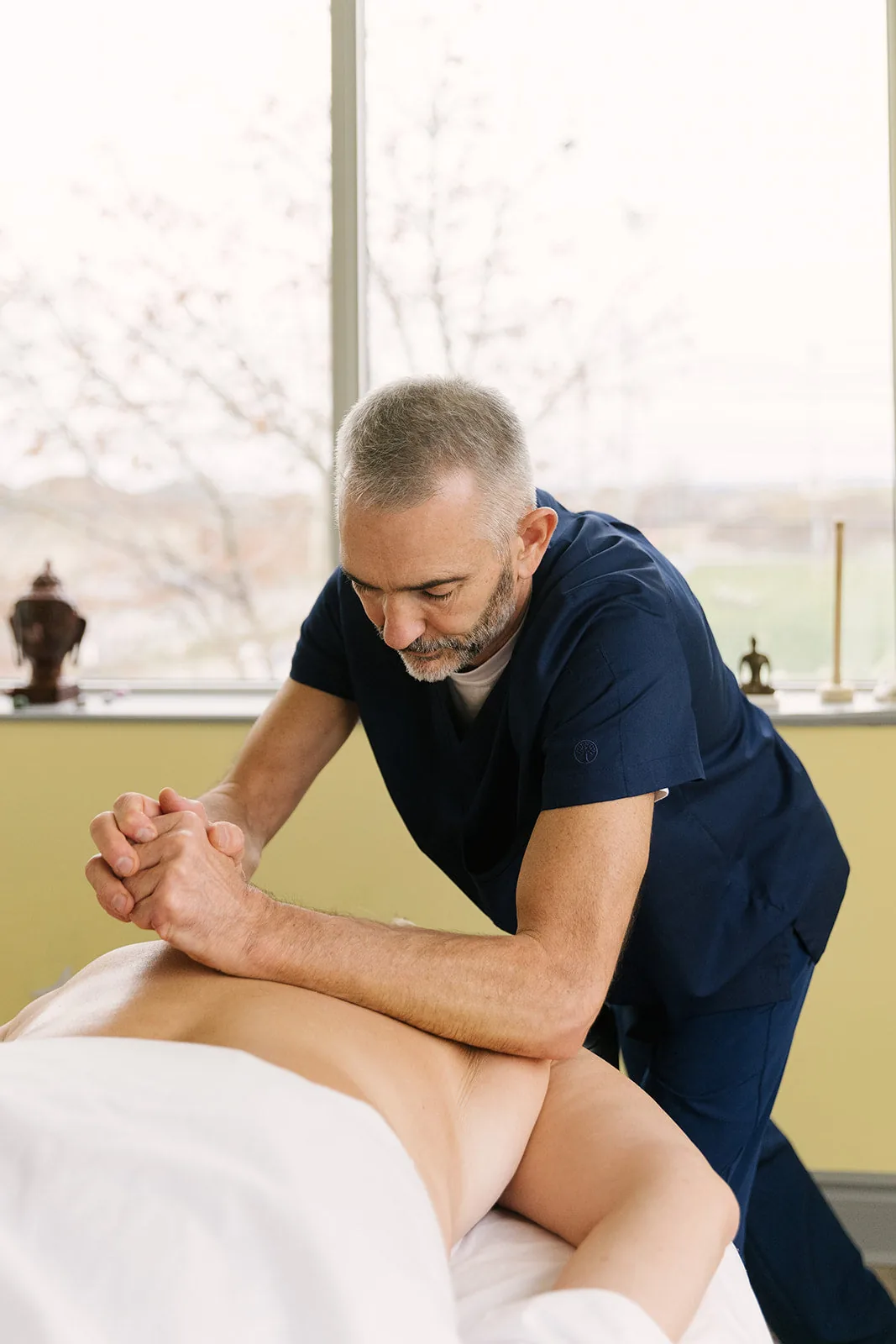
During a session your practitioner uses light, precise hand movements: gentle compression, mobilisation and lengthening of tissues. They ‘listen’ with their hands for areas of restriction, then work to release them, looking at the whole body rather than only the painful spot. Treatment is planned around your own assessment.
Your practitioner is Dr. Rostyslav Bilchenko, D.O.M.P., who trained in Europe as a medical doctor (urologist) and is certified in visceral manipulation by the Barral Institute (UK). His focus is digestive, urological and urogynaecological concerns. Read his full bio on our team page.
A first visceral assessment at our Maple clinic takes 60 minutes and costs $160; follow-up treatments are $145. See fees and insurance for insurance details. Visceral osteopathy is one of the types of osteopathy we offer, and it often sits within a wider osteopathic plan.
When visceral osteopathy helps
People usually come to us for one of three reasons. Visceral osteopathy works alongside medical care, not instead of it, so please see your doctor first about new, severe or changing symptoms.
Digestive Complaints and Bloating
Bloating, constipation, cramps or a feeling of tightness in the abdomen. Gentle work on the abdominal organs and the tissues around them may ease discomfort and support more comfortable digestion.
Post-surgical Adhesions and Scars
After abdominal or pelvic surgery, a caesarean birth or an injury, scar tissue can pull on nearby structures. Treatment aims to improve the mobility of the tissues around the scar once it has fully healed and your surgeon agrees.
Chronic Somatic Tension
Some people carry stress in the body as a tight abdomen, shallow breathing, back pain or pelvic discomfort. Releasing tension around the organs can help your body relax and move more freely, and our psychotherapist can support the stress side too.
What happens in a visceral session
Your first visit is a 60-minute assessment and treatment, planned around what your body tells us.
Step 1: Your story
We ask about your symptoms, digestion, past surgeries, scars, injuries and stress, and look at any medical reports you bring.
Step 2: Whole-body assessment
Your practitioner checks the abdomen, back, pelvis and breathing with light hands to find where tension starts, not only where you feel it.
Step 3: Gentle treatment and a plan
Treatment uses soft, precise techniques. Afterwards, drink water, keep the rest of the day easy and follow the home advice you receive.
Book visceral osteopathy in Maple
Book your 60-minute visceral assessment online, or call us to ask whether it suits your symptoms. Pelvic concerns? You may also like to read about pelvic health physiotherapy.
Common questions
Does osteopathic treatment hurt?
Osteopathy is usually gentle and non-invasive. Techniques range from light holds to slow stretches and joint movements, and your practitioner adjusts the pressure to your comfort. Tell them at any time if something feels uncomfortable. After treatment, drink water and avoid strenuous activity for the rest of the day while your body adapts, and follow the home care advice you are given.
Is my treatment covered by extended health benefits?
Many extended health plans cover registered massage therapy (RMT), physiotherapy, psychotherapy (RP) and registered dietitian (RD) services. Osteopathy is covered by some plans, depending on your policy. Limits and rules differ from plan to plan, so check your benefits booklet or call your insurer before your visit. We are happy to help you work out what your plan includes.
How do I claim my visit from my insurance?
Not at the moment. You pay at the visit and receive a receipt from your registered practitioner, which you submit to your extended health plan for reimbursement. We are happy to help you check what your plan covers. Fees are on our fees and insurance page.
How is it different from general osteopathy?
General osteopathy works mainly with the joints, muscles and fascia. Visceral osteopathy focuses on the internal organs and the connective tissues that hold them, using very light and precise techniques. Many treatment plans combine both, and your practitioner will suggest what suits you after your assessment. Learn more about osteopathy.