Diastasis Recti Rehab Program: Tupler Technique
A non-surgical diastasis recti treatment program based on the Tupler Technique, led by Iryna Bilchenko, a Tupler Technique Master Trainer. Work with her in the clinic or over Zoom, or follow the 18-week online support program from anywhere in Canada.
What diastasis recti is and why it matters
Diastasis recti is a separation of the outer abdominal muscles along the connective tissue in the middle of the belly (the linea alba). Pregnancy is the most common cause, but weight gain, incorrect exercise and abdominal surgery can cause it too, in women and in men. Signs people often notice:
- A ridge or dome along the middle of the belly when you sit up
- A belly that still looks pregnant long after birth
- A weak or disconnected core
- Lower back pain
- Poor posture
- Pelvic floor problems such as leaking
- Bloating or constipation
- A bulge in the belly that bothers you
A quick self-check at home
Lie on your back with your knees bent and your feet flat. Place your fingertips across the middle of your belly at the belly button, pointing toward your feet. Lift your head slightly, as if starting a small curl, and feel for a gap or a soft area between the muscles. Repeat a little above and below the belly button.
If you can feel a gap, or your fingers sink into a soft area, it is worth having it checked. A self-check is not a diagnosis: at your assessment Iryna checks the separation, takes ‘before’ photos and shows you the four steps, and progress is measured again during the program. If you are pregnant or had surgery recently, check with your midwife or doctor first.
Untreated diastasis recti can contribute to back pain, poor posture, pelvic floor problems and digestive discomfort, so it matters for more than how your belly looks. If you also have leaking or pelvic heaviness, pelvic health physiotherapy can work alongside the program.
How the Tupler Technique works
The Tupler Technique is a four-step diastasis recti treatment program focused on healing the connective tissue between the separated muscles. You measure your belly before you start and again as the weeks go by, so you can see your progress.
Step 1: Tupler Technique exercises
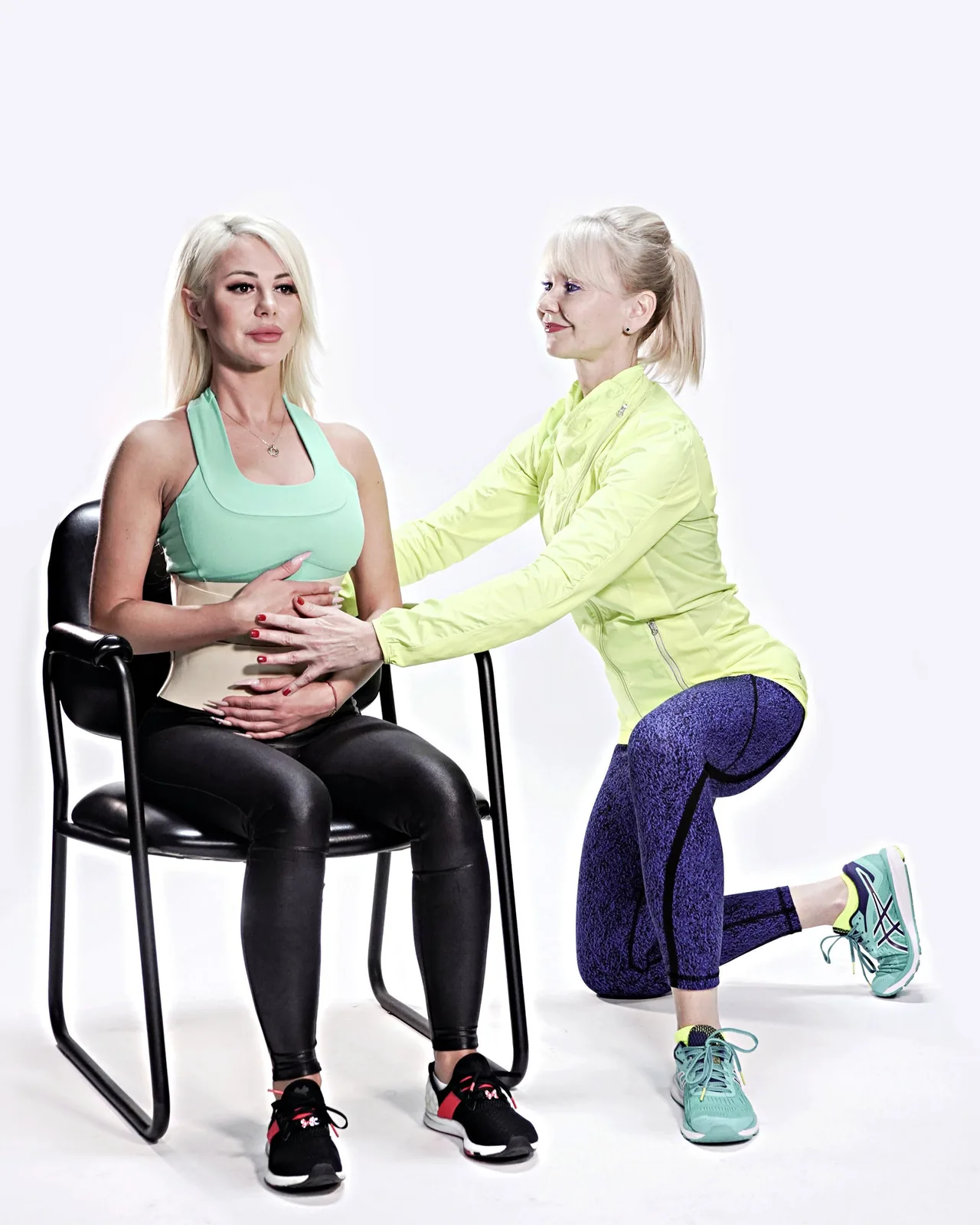
Belly breathing and seated exercises strengthen your deep transverse muscle and teach you to use it correctly. They progress over the 18 weeks.
Step 2: Wearing a splint
The Diastasis Rehab Splint holds the separated muscles and connective tissue closer together, so the tissue can heal in a better position.
Step 3: Core awareness in daily life
You learn to engage your transverse muscle during day-to-day activities, so your core stays protected well beyond your exercise time.
Step 4: Getting up and down correctly
Simple body mechanics for lying down, sitting and standing up without putting pressure on the gap.
In-clinic, online and products
Choose the diastasis recti treatment format that suits you, with options for women, men and pregnancy. Nutrition support from our Registered Dietitian can be added.
In-clinic Program
The 18-week individual intensive course with Iryna: three sessions in weeks 1, 3 and 6 (six hours in total), then four 15-minute belly checks in weeks 9, 12, 15 and 18, in person or over Zoom, for $850. Single sessions start at $150 for 60 minutes.
18-week Online Support Program
Weekly videos, Tupler tips and an online community you can follow from home, repeating weeks as often as you need. $70 on its own, or included in our treatment packages.
Tupler Products
Diastasis Rehab Splints ($75), the Tupler Technique Guidebook, videos for women and men, and packages from $170 that bundle a splint, video, guidebook and the online program. Pregnancy packages are available too.
Start your program
Book an assessment with Iryna in the clinic or over Zoom, or join the 18-week online program today. Looking for more ways to stay strong? See all our wellness programs.
Common questions
What is the Diastasis Recti Rehab Program?
It is a non-surgical program for separated abdominal muscles, based on the Tupler Technique and led by Iryna Bilchenko, a Tupler Technique Master Trainer. It follows four steps: exercises, wearing a splint, building deep core awareness and learning to get up and down correctly. The program runs over 18 weeks, in the clinic or online via Zoom, for women and men.
Can I see a pelvic health physiotherapist during pregnancy or after birth?
Yes. We support you before and after childbirth, including perineal healing, scar tissue management and restoring pelvic floor function. If your abdominal muscles have separated after pregnancy, our Diastasis Recti Rehab Program may also help. If you have any pregnancy complications, check with your midwife or doctor before you start treatment.
Can men have diastasis recti?
Yes. Pregnancy is the most common cause, but weight gain, incorrect exercise and abdominal surgery can also separate the abdominal muscles, so diastasis recti affects men too. Our program and treatment packages are available for men as well as for women.
Can I do the program online?
Yes. Individual sessions and the 18-week intensive course with Iryna are offered over Zoom as well as in person, and the 18-week online support program is fully online, so you can follow it from anywhere.
How should I prepare for my first individual session?
If you can, watch one of the Tupler Technique diastasis videos or read the Together Tummy book first, so you already know the four steps. Your session can then focus on your questions. If you have not had a chance, book a longer session so the technique can be explained from the start. Both are available in our shop.