Schroth Method Scoliosis Therapy near Toronto (Maple and Alliston)
Schroth method scoliosis therapy in Ontario for teens and adults, at our Maple (Vaughan) clinic just north of Toronto and in Alliston. Your program is built around your own curve: 3D posture correction, special breathing and exercises you continue at home.
What the Schroth method is
The Schroth method is a non-surgical, exercise-based therapy for scoliosis, developed by Katharina Schroth. Instead of general stretching, every exercise is matched to the shape of your own curve, with the aim to de-rotate, elongate and stabilise the spine in three dimensions.
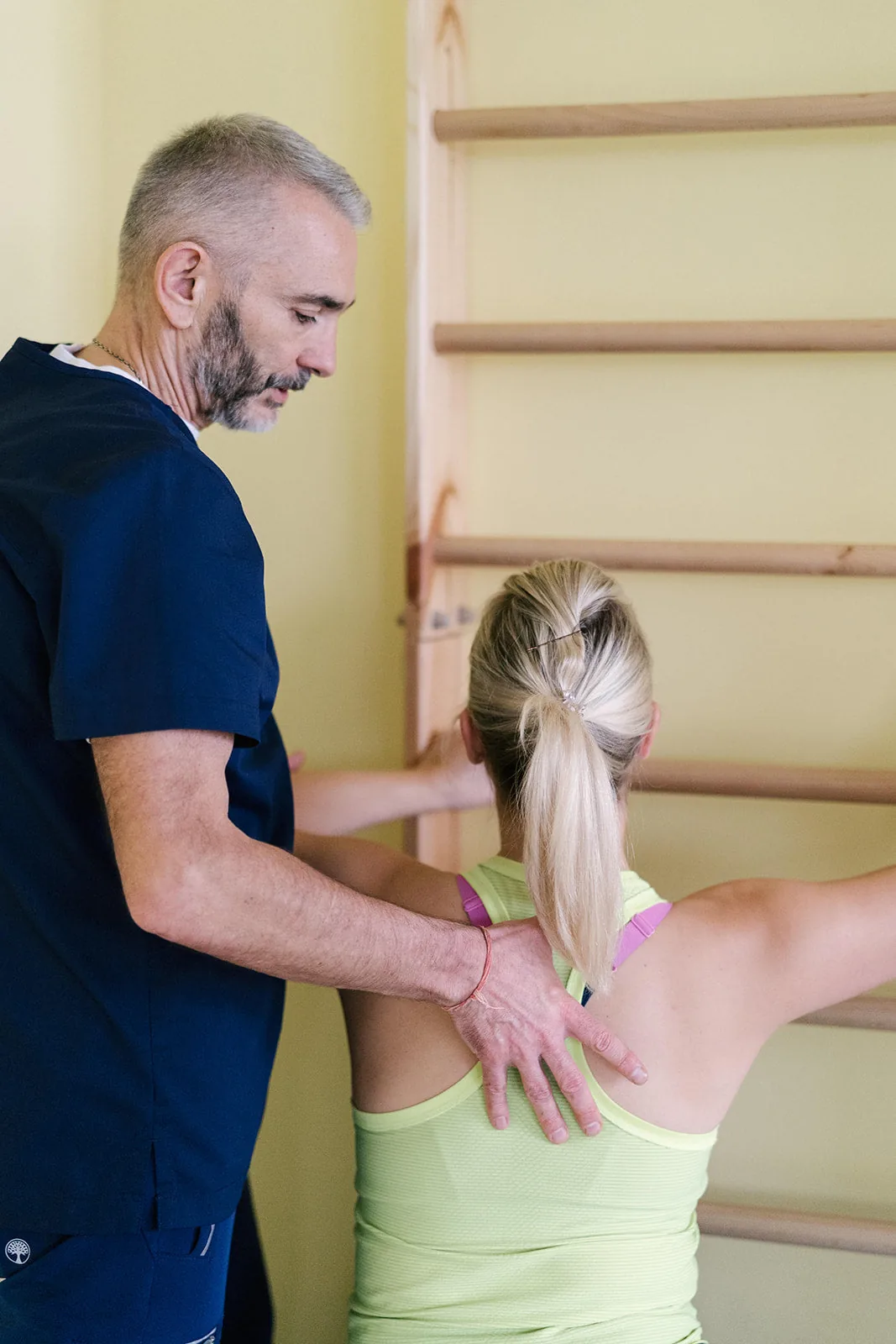
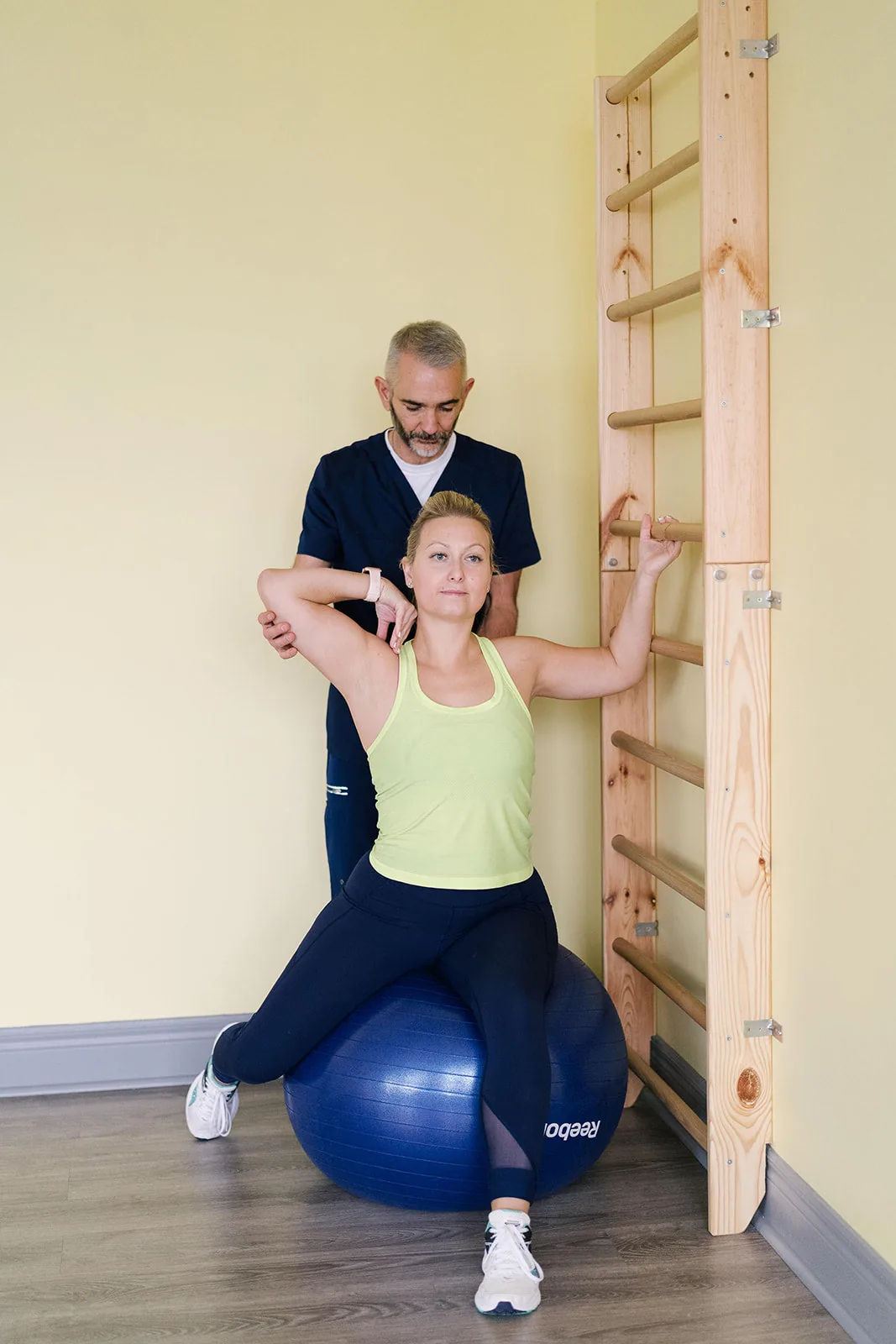
Sessions combine three elements: exercises that restore balance between overworked and weakened muscles, rotational angular breathing (RAB) that directs the breath into the compressed side of the rib cage, and posture awareness training with mirrors, so you learn to recognise and correct your position in daily life. Therapy balls, poles and Schroth bars help you find and hold each correction.
Your program is led by Dr. Rostyslav Bilchenko, D.O.M.P., who holds a Certification in the Conservative Treatment of Scoliosis and Other Spinal Deformities from Dr. Weiss (German Scoliosis Academy). Back to Health is a certified Schroth Best Practice provider. Read his full bio on our team page.
Who Schroth therapy helps
Schroth exercises can be adapted for teens and adults with different degrees of scoliosis. We are honest about what they can and cannot do for you.
Teens with Idiopathic Scoliosis
While the spine is still growing, a curve can change, so early and consistent exercise matters. Teens learn a daily routine and how to use their corrections at school, in sport and at the desk, alongside a brace when one is prescribed.
Adults with Scoliosis and Kyphosis
Adults often come because of back pain, stiffness or breathing that feels restricted. The goal is realistic: less pain, better posture, stronger core stability and the tools to manage your spine yourself for the long term.
Post-brace and Post-surgery Support
When bracing ends, exercises help you keep your posture and core strength. After spinal surgery, a tailored program can support strength and posture once your surgeon has cleared you for exercise.
Treatment plan and fees
A Schroth program usually takes 5 to 20 sessions of 45 to 60 minutes, depending on your curve, your age and how regularly you practise at home.
Step 1: Assessment
We review your history and any X-rays or reports, assess posture, curve pattern, breathing and movement, and agree on goals.
Step 2: Your individual program
You learn exercises and breathing matched to your curve, with props and mirror feedback at every session.
Step 3: Home exercises
A regular home routine is part of every plan: consistent practice is what keeps the progress you make.
Step 4: Progress reviews
We review your posture and exercises as you go, adjust the program and suggest other services or classes when they would help.
Schroth therapy fees
Schroth therapy follows the same price list as osteopathy.
| Service | Length | Maple (Vaughan) | Alliston |
|---|---|---|---|
| Initial scoliosis assessment | 60 min | $160.00 | $150.00 |
| Follow-up session | 60 min | $145.00 | $135.00 |
Online booking for Schroth therapy is open at our Maple clinic. For Alliston, please call (289) 252-3166 [TBC: Schroth sessions in Alliston]. Full prices and insurance: fees and insurance. For exercise examples, read Schroth method exercises for scoliosis.
Book a scoliosis assessment
Start with a 60-minute assessment in Maple (Vaughan), a short drive from Toronto, and bring any recent spine X-rays and reports. Schroth care sits within our osteopathy services, and our yoga therapy and wellness programs can help you stay active afterwards.
Common questions
What is the Schroth method for scoliosis?
The Schroth method is a non-surgical, exercise-based therapy for scoliosis. Exercises are tailored to your curve and combine posture correction, rotational breathing and posture awareness. Its main goal is to help stop the curve from progressing and to ease pain. A program usually takes 5 to 20 sessions of 45 to 60 minutes, plus home exercises, for teens and adults. See scoliosis care.
How many sessions will I need?
It depends on your condition, how long you have had it and your goals. After your first assessment your practitioner gives you an honest estimate and reviews progress at every visit. As a guide, a Schroth scoliosis program usually takes 5 to 20 sessions, and the Diastasis Recti Rehab Program runs over 18 weeks. Many patients later move to occasional maintenance visits or a wellness program.
How do I claim my visit from my insurance?
Not at the moment. You pay at the visit and receive a receipt from your registered practitioner, which you submit to your extended health plan for reimbursement. We are happy to help you check what your plan covers. Fees are on our fees and insurance page.
Can Schroth stop curve progression?
Helping to stop the curve from progressing is the main goal of the Schroth method, and many patients also see better posture and less pain. We cannot promise a result: progress depends on your age, bone maturity, the size of your curve and how consistently you do your home exercises. In some cases we recommend combining Schroth with bracing. If avoiding surgery is one of your goals, talk to your doctor and to us so we can work out together what is realistic.