Effective Schroth method exercises for scoliosis
How Schroth method exercises work for scoliosis, what results to expect, and how to practise at home between sessions.
Scoliosis is a spinal condition in which the spine curves to the side, forming a C-shaped or S-shaped curve. If it is not managed well, it can cause significant discomfort and other problems over time.
Among the treatment options, the Schroth method stands out as a non-invasive, drug-free, exercise-based approach. At Back to Health Osteopathy and Wellness, we offer Schroth scoliosis therapy as part of our osteopathy services. This article explains the principles behind Schroth method exercises, the core techniques and what they can offer people living with scoliosis.
What is the Schroth method?
The Schroth method is a non-surgical approach to scoliosis developed by Katharina Schroth in the early 20th century. It uses specially designed exercises that de-rotate, elongate and stabilise the spine. The exercises strengthen weakened muscles and lengthen the compressed areas of the body. Every program is fitted to the individual shape of your spinal curve.
The three core components of Schroth exercises
Muscular symmetry
Scoliosis tends to leave muscles on one side of the body overworked while the other side weakens. Some Schroth exercises focus on restoring balance between these muscles, creating better symmetry and stability for the spine.
Rotational angular breathing
Rotational angular breathing (RAB) is a technique developed for the Schroth method. By breathing into the compressed side of the rib cage, you gradually help it expand, which can make breathing easier. Over time this technique also supports better posture.
Posture awareness
Schroth helps you develop a clear sense of your posture and how it affects your spine. Using mirrors and other tools, you learn to recognise and correct your position more often in daily life, which helps limit further curvature over time.
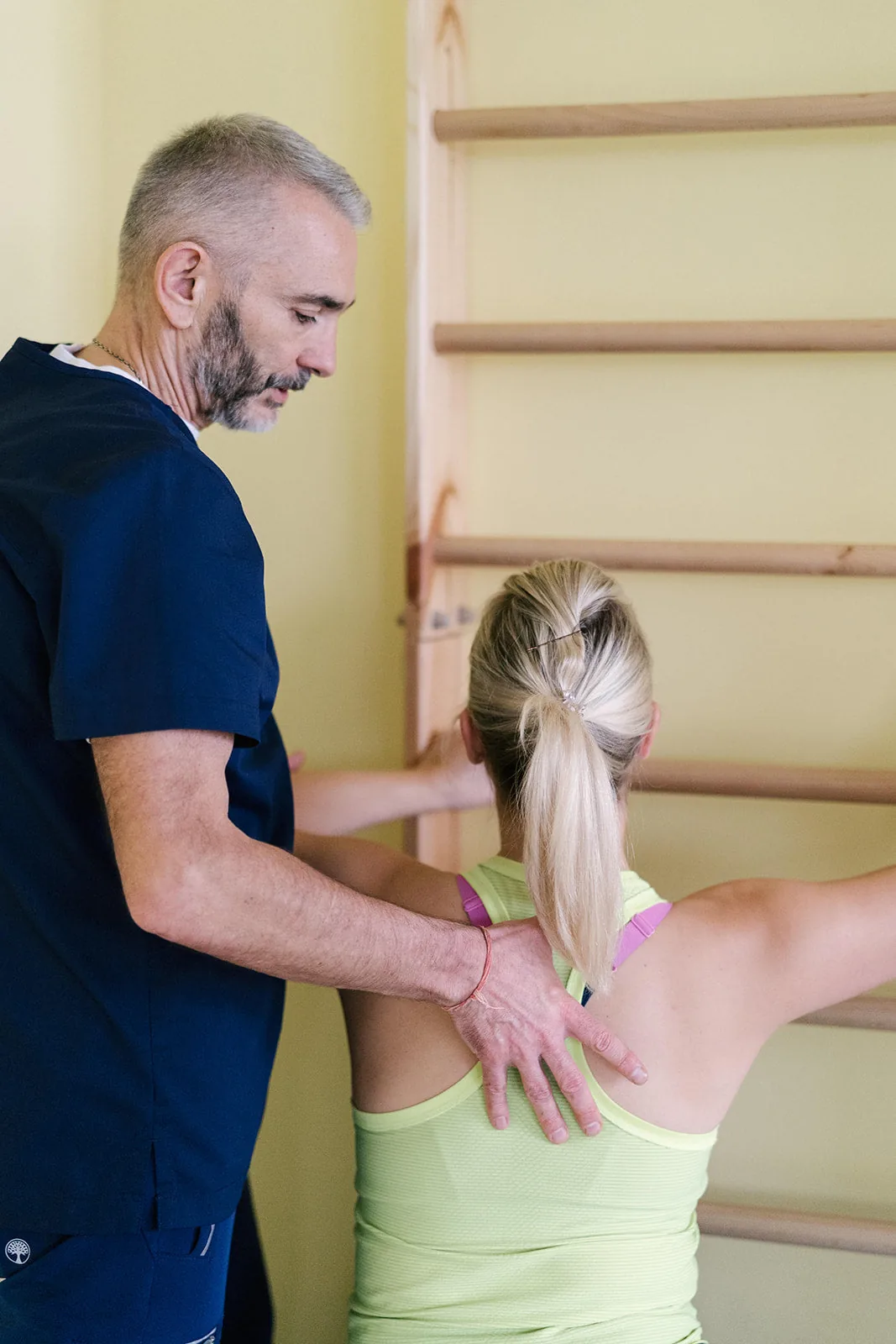
In the clinic, we also use props such as therapy balls, poles and Schroth bars to help you find and hold the correction. The three components work together, with the aim of improving alignment and helping to prevent the curve from progressing.
Benefits of Schroth exercises
The Schroth method can be adapted for teens and adults with different degrees of scoliosis. Because each program is personalised, the benefits vary from person to person. A successful program may bring:
- improved posture
- better core stability
- greater strength
- easier breathing
- less pain
- better movement patterns
The role of your Schroth-trained practitioner
Our Schroth-trained practitioners guide you through each exercise so that you perform it correctly and comfortably. They adjust your plan as you progress and offer support and encouragement along the way, which makes the work of managing scoliosis easier. Dr. Rostyslav Bilchenko holds a Certification in the Conservative Treatment of Scoliosis and Other Spinal Deformities from Dr. Weiss (German Scoliosis Academy). Meet the whole team on our team page.
What results can you expect?
The main goal of Schroth method exercises is to help stop scoliosis from progressing. After completing a program, many patients see some visible improvement in their posture and spinal alignment, along with better core stability, strength, breathing and ease of movement.
A Schroth program typically consists of 5 to 20 sessions of 45 to 60 minutes, plus regular exercises at home. The length and frequency depend on you, and we plan each program case by case. Results also depend on factors such as your age, bone maturity and the degree of your curve, which we discuss before you start. In some cases we may recommend combining Schroth exercises with bracing.
For some patients, slowing the progression of scoliosis may reduce the likelihood of needing surgery. If this is one of your goals, talk to your doctor and to us so we can work out together what is realistic for you.
Why home practice and continued care matter
Scoliosis can progress, so ongoing care is the key to keeping the progress you make. Learning to do your exercises at home is a central part of the Schroth method: regular practice reinforces the posture corrections, muscle strengthening and breathing techniques you learn in your sessions.
Tips for effective home practice
- Be consistent: aim to include at least some Schroth exercises in your daily routine.
- Create a dedicated space: a quiet, comfortable corner at home reminds you to practise whenever you see it.
- Track your progress: keep a journal or use an app to note how you are doing.
- Stay in touch: regular check-ins with your practitioner let them adjust your exercise plan as needed.
Bringing the Schroth method into daily life
At its simplest, the Schroth method is also about building better posture and ergonomics over time. You can support it every day with:
- Mindful posture: notice how you sit, stand and walk, and use a mirror or reminders to check yourself several times a day.
- Ergonomic changes: adjust your workspace, car seat and home set-up to support better alignment.
- An active lifestyle: alongside your Schroth exercises, choose activities that are kind to your spine, such as swimming, yoga or Pilates. Our yoga therapy and wellness programs can help you keep moving.
- Breathing practice: use rotational angular breathing during the day to support rib cage expansion and posture.
Is the Schroth method safe?
The Schroth method is generally safe and well tolerated. As with any form of exercise, you may feel mild discomfort or muscle soreness, especially at the start. Tell your practitioner how you feel so they can adapt the exercises.
Start with a scoliosis assessment
At Back to Health, we build a personalised Schroth program for every scoliosis patient, with guidance from practitioners trained in the method. Schroth scoliosis care is available at both our Maple (Vaughan) and Alliston clinics. Book an assessment to find out what the method could do for you, or read what osteopathy treats to learn about our wider approach.
Common questions
How many Schroth sessions will I need?
A Schroth program usually takes 5 to 20 sessions of 45 to 60 minutes, plus home exercises. After your first assessment your practitioner gives you an estimate based on your age, curve and goals.
Can the Schroth method stop scoliosis from progressing?
Helping to stop the curve from progressing and easing pain are the main goals of Schroth exercises. Results depend on your age, bone maturity, the degree of your curve and how regularly you practise at home, so no outcome can be guaranteed.
Is Schroth scoliosis care available in Alliston?
Yes. Schroth scoliosis care is offered at both our Maple (Vaughan) and Alliston clinics. Check the location when you book, or call us.