Cupping therapy: types and benefits
How cupping therapy works, the main types of cupping, what it may help with, how long the marks last and how to prepare for a session.
Cupping therapy has become more popular in recent years, catching the attention of athletes and everyday clients alike as a way to ease pain and muscle soreness. The practice has roots in ancient Egyptian, Chinese and Middle Eastern traditions. During a session, your practitioner places cups on the skin, usually on the back, and creates gentle suction. This lifts the skin and underlying tissues into the cup, which improves blood flow and helps muscles and tissues relax.
How does cupping work?
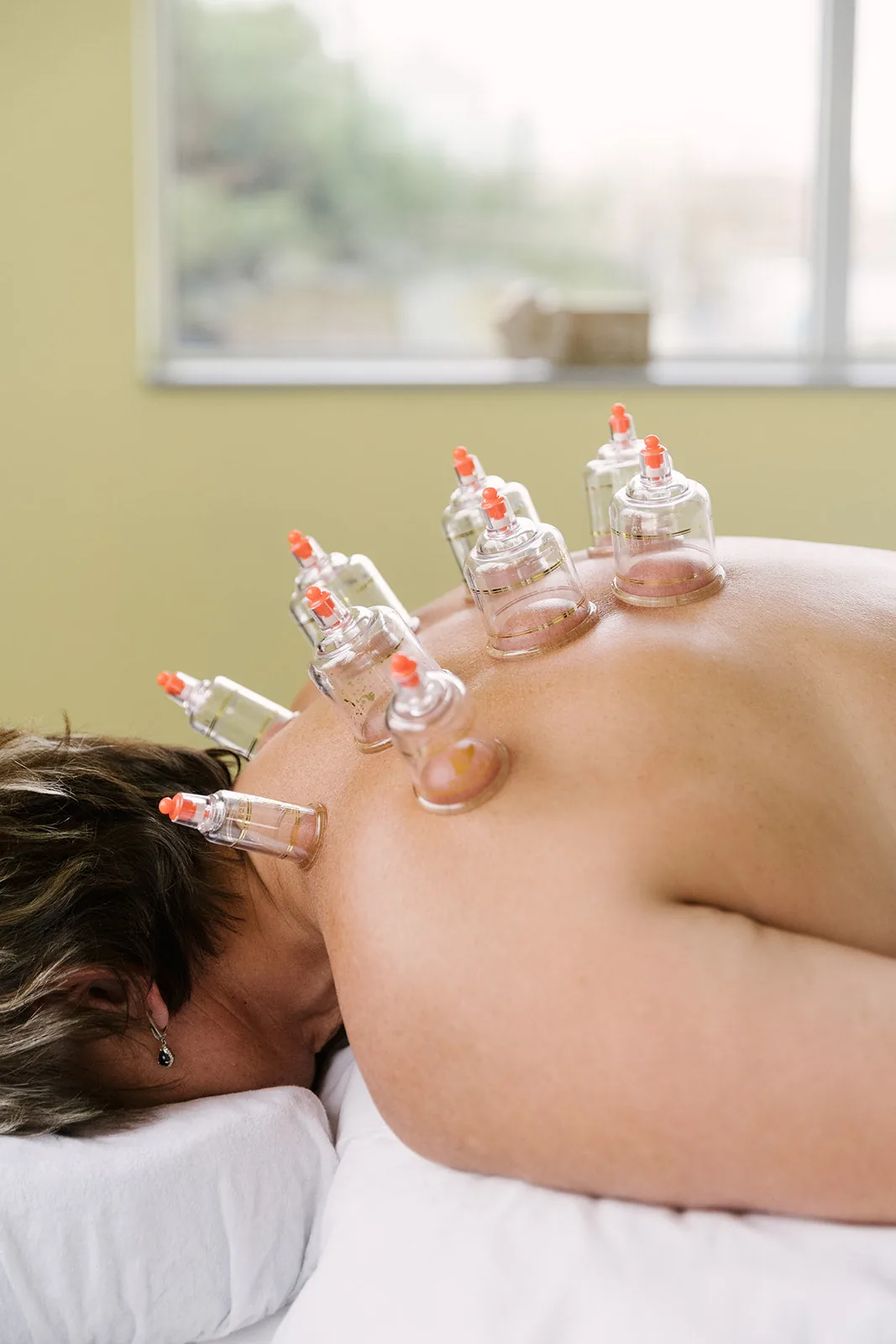
For a typical session, you lie face down and your practitioner places the cups on your back. A small, carefully controlled hand pump removes air from each cup to create a vacuum. The suction draws the skin and the surface layer of muscle up into the cup. It is a little like pressing a cup to your face as a child and feeling it cling.
The suction increases blood circulation in the area under the cup, which may support tissue repair and help muscles let go of tension.
What people use cupping for
Research into cupping is still developing, and new studies are published regularly. Most people come to cupping for muscle pain, stiffness and tension, for relaxation, or to support recovery from training. As with any therapy, pay attention to how your body responds, because some people react more strongly than others. Let your practitioner know about any medical conditions or medications before your session.
Types of cupping
There are four main types of cupping: dry, wet, fire and moving. Here is a quick overview.
Dry cupping
Dry cupping is the most widely practised form and the main one we use at Back to Health. Your practitioner places the cups on the skin and creates suction without breaking the skin. The cups usually stay in place for 5 to 10 minutes, while the skin underneath rises and reddens as blood flows to the area. Dry cupping is often used for muscle pain and tension and to support circulation. Many people find it deeply relaxing, almost like a reverse massage: the muscle is lifted rather than pressed.
Wet cupping
Wet cupping, known as “hijama” in the Arabic tradition, goes a step further: the practitioner makes small cuts in the skin before applying the cups, and the suction draws out a small amount of blood. Supporters believe it helps the body clear toxins. There is no need to go this far if you are just starting to explore cupping.
Fire cupping
Fire cupping is the most traditional and the most “showy” method. A flame is briefly placed inside the cup to remove the oxygen, creating a vacuum when the cup touches the skin. Before air pumps, this was one of the only ways to perform cupping. It adds gentle warmth, which many people find soothing for chronic muscle tension.
Moving cupping
Moving cupping, also called gliding cupping, combines cupping with massage. Your practitioner applies massage oil to the skin and glides the cups along the muscles, creating a moving suction. It covers large areas, often the back, legs and arms, and it is the other form of cupping we offer at Back to Health.
Benefits of cupping therapy
- Pain relief: many people use cupping for chronic back pain, neck and shoulder tension and tension headaches, which often come from tight muscles in these areas.
- Relaxation: the sensation of the cups and the increased blood flow can bring deep relaxation and help ease stress.
- Circulation: drawing blood to specific areas may support healing and help with soreness after exercise or injury.
Cupping is not a miracle cure, but many people find real relief and a greater sense of well-being from it. It also works well within a wider plan of registered massage therapy. Read which other techniques may help in top 5 types of massage for chronic pain.
Understanding cupping marks
Cupping leaves round marks on the skin, caused by blood being drawn to the surface. They are not usually a cause for concern, but they surprise many first-time clients.
How long do cupping marks last? After lighter treatments they typically start to fade within 3 to 7 days, and after stronger sessions they may take up to two weeks. It depends on your skin sensitivity, the strength of the suction and your circulation. Staying well hydrated and taking warm showers may help them fade, but mostly it is a matter of time, much like a bruise.
Preparing for your cupping session
- Before: drink plenty of water and eat a light meal so you feel energised. Wear comfortable, loose clothing that is easy to adjust or remove.
- During: tell your practitioner how the pressure feels. You may feel a tight or pulling sensation, but it should not be painful.
- After: drink plenty of water and avoid strenuous exercise for about 24 hours. It is also a good idea to wait at least two hours before showering.
Is cupping right for you?
Cupping has been used for thousands of years, and research continues to explore how and when it helps. Whether you are an athlete looking to recover or you live with chronic muscle tension, cupping may be worth trying with an open mind and realistic expectations.
Cupping massage is offered by our registered massage therapists. Book a cupping session at our Maple (Vaughan) or Alliston clinic, or see fees and insurance for prices and insurance.
Common questions
Which massage is right for me?
It depends on your goal. Deep tissue and sports massage target stubborn tension, old injuries and recovery from training. Swedish massage is gentler and more relaxing. Cupping uses suction cups to release muscle tension and support circulation. Your RMT assesses you first and recommends the best approach.
Is massage therapy covered by my benefits?
Massage from a registered massage therapist (RMT) is covered by many extended health plans. After every visit you receive an RMT receipt to claim from your insurer. Some plans ask for a doctor’s note and each plan sets its own yearly limit, so check your policy first. See fees and insurance.