
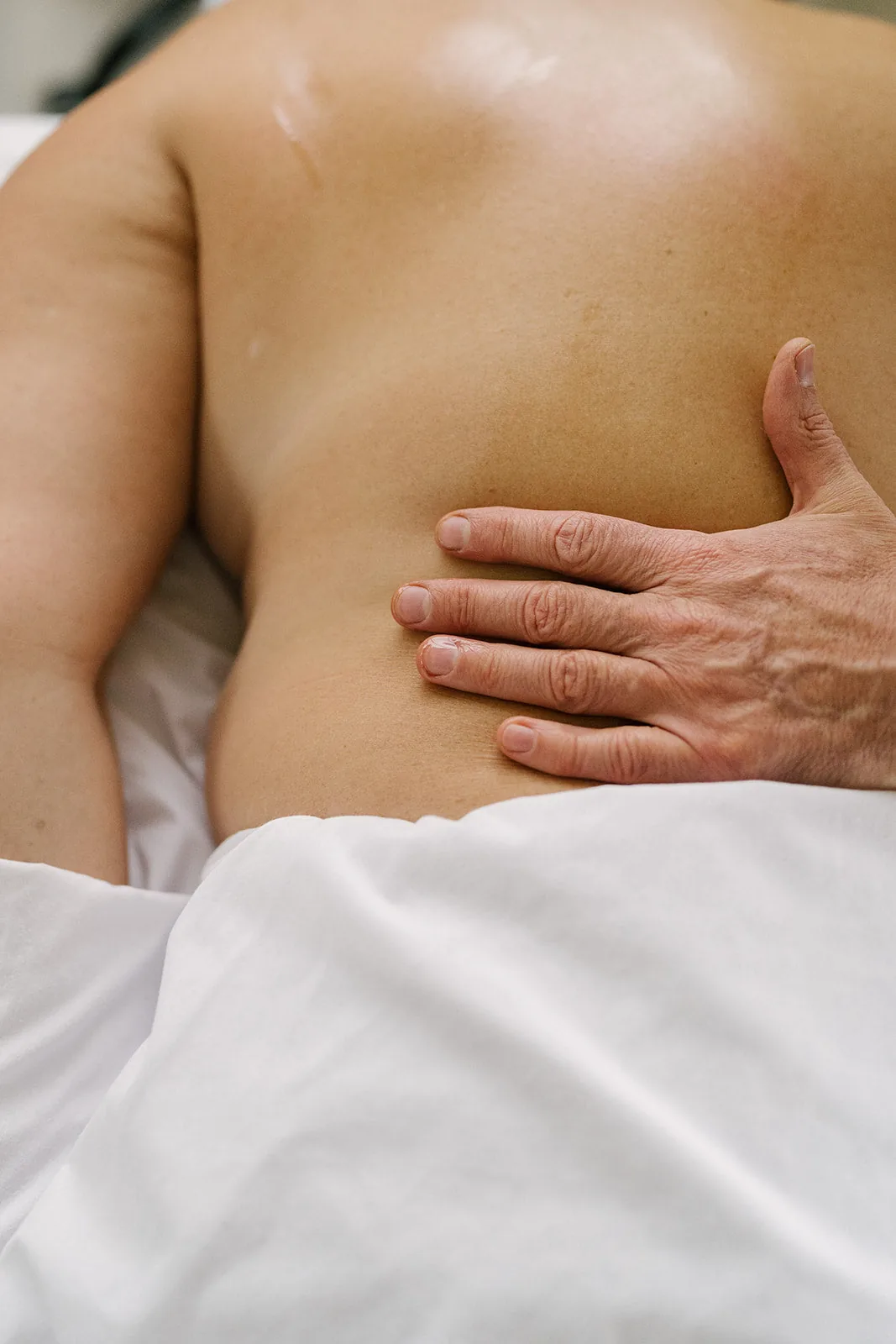
Massage therapy for sciatica
Which massage techniques may ease sciatic pain, how we build a personalised plan, and how often to book during a flare-up and after.
If you live with sciatica, you know how much a flare-up can disrupt daily life. Among the treatments that can improve quality of life, massage therapy for sciatica is one of the easiest to start with. At Back to Health, our registered massage therapists create personalised massage therapy plans that aim to ease sciatica pain and support recovery over time.
In this article we look at what sciatica is, which massage techniques may help and how we build a plan with you.
Understanding sciatica
What is sciatica?
Sciatica is pain that travels along the path of the sciatic nerve, which runs from your lower back through your hips and buttocks and down each leg. It usually affects one side of the body. Common causes include a herniated disc, a bone spur on the spine or narrowing of the spinal canal (spinal stenosis) pressing on part of the nerve. This pressure can cause inflammation, pain and sometimes numbness in the affected leg.
Symptoms of sciatica
- Sharp pain: burning or shooting pain from the lower back down the leg.
- Numbness and tingling: pins and needles in the leg or foot.
- Weakness: muscle weakness in the affected leg or foot.
- Difficulty moving: pain that gets worse with movement, making walking or standing hard.
If your symptoms are severe, getting worse, or come with sudden leg weakness or changes in bladder or bowel control, see a doctor or go to emergency right away.
How massage therapy may help with sciatica
- Pain relief: massage can reduce muscle tension and promote relaxation, which may ease sciatic pain.
- Better circulation: improved blood flow brings oxygen and nutrients to the affected area.
- Better mobility: regular massage can improve flexibility and range of motion, making movement easier.
- Stress relief: stress and anxiety can make pain feel worse, and relaxation helps break that cycle.
Massage techniques for sciatica
Different types of massage therapy offer different kinds of relief. An experienced therapist knows techniques that target the muscles around the sciatic nerve, with the aim of easing pain in both the short and long term.
Trigger point therapy
Trigger point therapy targets specific knots, or “trigger points”, in the muscles. For sciatica, it focuses on tender points in the piriformis, gluteus medius and lower back muscles, and on the referred pain patterns common in sciatica. Many people feel relief from radiating leg pain after this work.
Deep tissue massage
Deep tissue massage uses slow, firm pressure to reach the deeper layers of muscle and fascia. It can release chronic tension in the lower back and glutes and may help with scar tissue in the area. It can feel more intense than other techniques: expect a strong sensation that eases as the muscles release.
Myofascial release
Myofascial release uses sustained, gentle pressure to lengthen the fascia (connective tissue). Releasing tight fascia around the lower back and hips can improve mobility in the area. Many people first feel a stretching sensation, followed by warmth and a sense of freedom.
Swedish massage
Swedish massage uses long, flowing strokes to relax the whole body. For sciatica, it reduces overall muscle tension, which may ease pressure around the nerve. It works less directly than the other techniques, but it is an excellent gentle start and a good maintenance option between more intensive sessions.
Building your massage therapy plan
The most effective approach often combines several of these techniques, chosen after a personalised assessment. At Back to Health, we consider your symptoms, lifestyle and overall health when we create your plan.
Initial assessment
Your registered massage therapist assesses your pain patterns, muscle tension and range of motion. Be ready to discuss your medical history, including any imaging results or diagnoses. This helps us tailor treatment and coordinate with your other health care providers.
Clear goals
Together, we set concrete, achievable goals, such as reducing pain, improving mobility or returning to a specific activity. Clear goals guide the plan and help us measure your progress.
The right mix of techniques
If you need to build up to stronger work, your therapist may start with Swedish massage to relax the area, then move on to more focused techniques such as trigger point therapy. Always tell your therapist how you feel: it is better to start gently and work up.
How often to book
Plans usually involve more sessions at the start and fewer as your symptoms settle. As a guide, your therapist may suggest:
- During a flare-up: two to three sessions per week.
- As symptoms improve: weekly or every two weeks.
- For maintenance: monthly sessions to help prevent recurrence once pain is well managed.
Your therapist reassesses and adjusts the plan as you progress.
Home care and other treatments
What you do at home makes a big difference. Your therapist can show you stretches, exercises and self-massage techniques to support your sessions. Massage also works well as part of a wider plan, for example with osteopathy or physiotherapy: keep your therapist up to date so they can adapt their approach.
Personalised sciatica care in Maple and Alliston
We offer massage therapy for sciatica at both our clinics. Everyone experiences sciatica differently, so we take the time to understand your needs and build a plan just for you. Our experienced massage therapists are committed to building lasting relationships with our clients in Maple (Vaughan) and Alliston.
If you are struggling with sciatica, book a massage therapy appointment at our Maple (Vaughan) or Alliston clinic. You may also like top 5 types of massage for chronic pain.
Common questions
Do I need a doctor’s referral for massage therapy?
No. You can book massage therapy directly online or by phone. Some extended health plans ask for a doctor’s note before they reimburse massage, so check your policy before your visit.
Is massage therapy covered by my benefits?
Massage from a registered massage therapist (RMT) is covered by many extended health plans. After every visit you receive an RMT receipt to claim from your insurer. Some plans ask for a doctor’s note and each plan sets its own yearly limit, so check your policy first. See fees and insurance.
How long is a massage session?
You can book 30, 45, 60, 75, 90 or 120 minutes. New patients usually start with a 60- or 75-minute visit, so your therapist has time to assess you and plan your care.