All about different types of massage
Swedish, deep tissue, sports, cupping, Thai and more: what each type of massage feels like, who it suits and how to choose.
Massage therapy is one of the most versatile and widely recognised ways to relieve stress and pain without medication. But there are many different types of massage, and it is not always easy to know which one is right for you. This guide explains the main types and their benefits, so you can choose with confidence, whether you are looking for relaxation, pain relief or a calmer mind.
Registered massage therapy
Registered massage therapy (RMT) covers a range of manual techniques that work with the muscles and connective tissues of the body. Registered massage therapists are formally trained in many kinds of massage, and during a session they may use techniques such as Swedish or deep tissue massage to match your needs and preferences.
Benefits include pain relief, relaxation, better flexibility and improved blood flow. Your RMT can also give you advice for home, such as tips on posture, ergonomics, stretching and self-care, which can bring lasting benefits.
Swedish massage
Swedish massage is an excellent choice for beginners: it is one of the gentlest forms of massage therapy and still very effective. It uses soft techniques such as kneading, long gliding strokes and circular movements, which gradually bring you into a state of deep relaxation.
This full-body massage releases tension and helps calm the mind without the intense pressure of stronger styles.
Deep tissue massage
Deep tissue massage aims to relieve more severe tension in the muscles and connective tissues. It uses firmer pressure than a standard therapeutic massage, reaching the deeper layers of muscles and tendons to work on stubborn knots and areas of discomfort.
It is helpful for people dealing with chronic pain, deep muscle tightness and old injuries, which your therapist can target specifically. In some cases it can bring longer-lasting relief from deep muscle knots. Compare it with Swedish massage in Swedish vs. deep tissue massage.
Sports massage
Sports massage is tailored to athletes, dancers and anyone who is regularly physically active. It focuses on muscles affected by recent or older injuries, and it can help with flexibility, may reduce the risk of injury and can support performance. You can talk with your therapist about which muscles and areas need attention for your activity. Read more about the benefits of sports massage.
Reflexology
Reflexology applies varying pressure to specific points, most often on the feet, and is traditionally also used on the hands and ears. Many people find it deeply calming. The practice has ancient roots, and there are different theories about how it works: some point to the calming effect of touch and the release of relaxing hormones such as endorphins, while “zone theory” maps areas of the body to points on the feet and hands.
Whatever the explanation, reflexology offers a relaxing, whole-body approach that supports a sense of wellness and balance. At our clinic we offer Thai style foot reflexology massage.
Cupping massage therapy
Cupping massage therapy uses suction to lift and pull the muscles and connective tissues instead of pressing into them. It is rooted in traditional Chinese medicine and has been practised for centuries. Today the cups are made of glass, silicone or plastic.
Your practitioner either places the cups on specific areas and leaves them in place, or moves them across the skin for more of a massage effect. The suction helps improve blood flow, relieve muscle tension and help you relax. Learn more about cupping therapy types and benefits.
Thai yoga massage
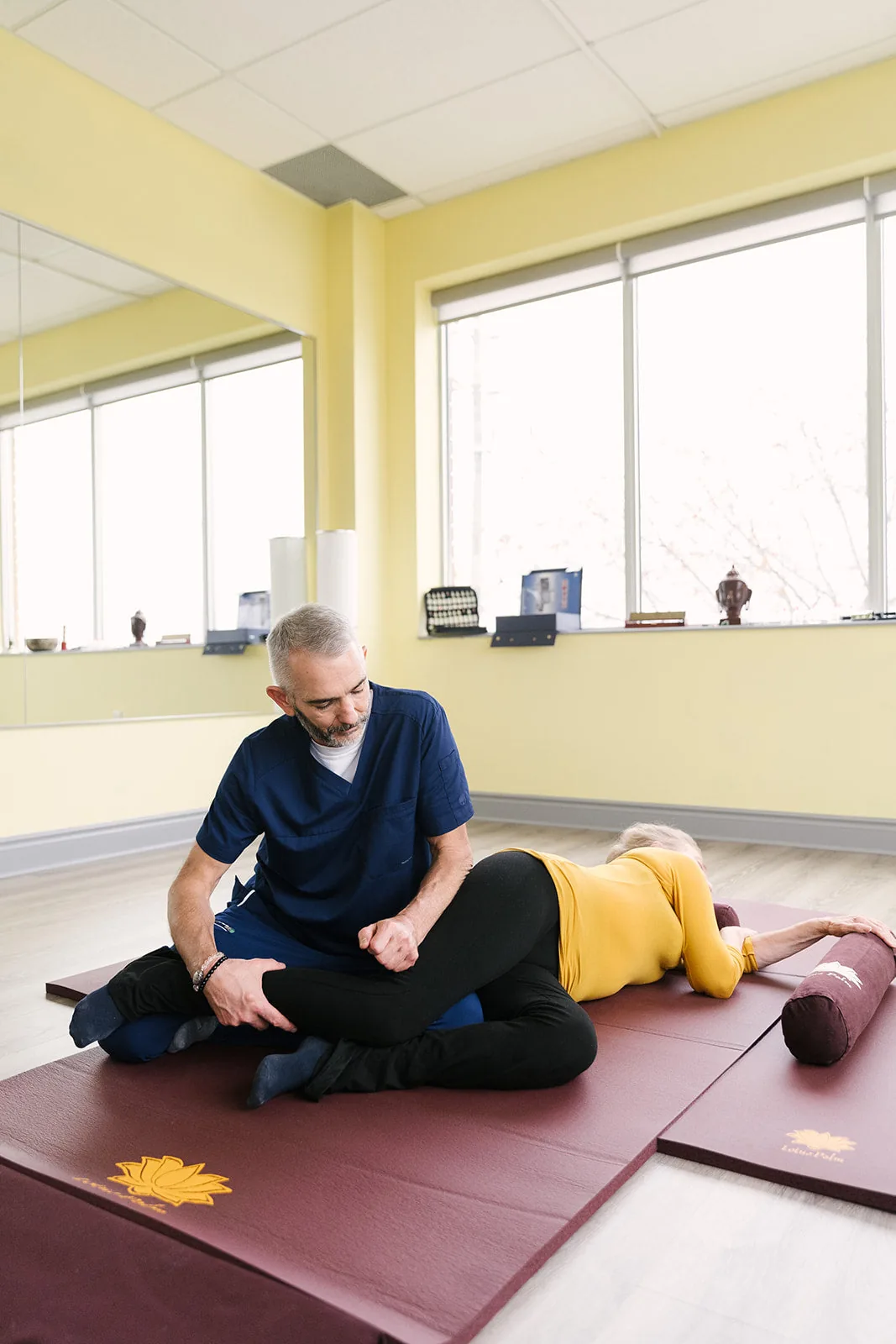
Most massage takes place on a table, but Thai massage is different. You stay in comfortable clothing on a floor mat while your practitioner moves, stretches and presses you into a series of yoga-like postures, so you get the benefits of stretching without effort. It can help improve flexibility, ease tension and boost your energy.
Both rejuvenating and relaxing, it is a great choice if you want to work on flexibility and overall well-being in a more active way. Thai yoga massage is available at our Maple (Vaughan) clinic.
Other specialised techniques
For more specific needs, therapists may use more specialised techniques, such as:
- Lymphatic drainage massage: gentle, rhythmic strokes that encourage the flow of the lymphatic system.
- Craniosacral therapy: gentle pressure on the skull, spine and pelvis, often used for stress relief. At our clinic this is part of craniosacral osteopathy.
- Myofascial release: sustained pressure on the connective tissue around muscles, to improve flexibility and ease stiffness.
Our therapists also offer Chi Nei Tsang abdominal massage and Indian head massage, among the nine types of massage available at Back to Health.
Choosing the right type of massage for you
A qualified, experienced massage therapist is the key to getting the benefits of massage. At Back to Health, every client starts with an assessment, so your therapist can recommend the type of massage that suits your needs and preferences.
During your visit, tell your therapist openly about your expectations and areas of concern: you are much more likely to get the results you want. Beyond that, it is partly about trying different styles and finding the right fit.
Ready to try? Book a massage at our Maple (Vaughan) or Alliston clinic.
Common questions
Which types of massage do you offer?
Our registered massage therapists offer nine types of massage: therapeutic, deep tissue, sports, Swedish relaxation, cupping, Thai yoga massage, Thai style foot reflexology, Chi Nei Tsang abdominal massage and Indian head massage. Thai yoga massage is available at our Maple clinic only. See registered massage therapy.
Will every type of massage give me an RMT insurance receipt?
Massage receipts are issued by registered massage therapists. If you plan to book Thai yoga massage, Thai style foot reflexology, Chi Nei Tsang or Indian head massage, ask us first whether that session qualifies for an RMT receipt under your plan. See fees and insurance.
How long is a massage session?
You can book 30, 45, 60, 75, 90 or 120 minutes. New patients usually start with a 60- or 75-minute visit, so your therapist has time to assess you and plan your care.